


How to Choose a Hoodie Online in Pakistan: 12-Point Checklist
A hoodie photo can lie about four things at once: colour, fit, thickness, and the fine print you only read after paying. Before you add anything to your cart, run it through twelve quick checks: the size chart, the GSM, and the policies most shoppers skip until it's too late.
The short version: choosing a hoodie online in Pakistan comes down to reading the specific product's size chart against your own measurements (not just its S/M/L label), confirming the fabric and GSM where it's published, looking at construction details like zip type and stitching, and reading the shipping, payment, and return terms before checkout.
The single biggest source of disappointment is fit, because "oversized" is described differently from one listing to the next sometimes even within the same store.
Why fit language varies more than you'd expect
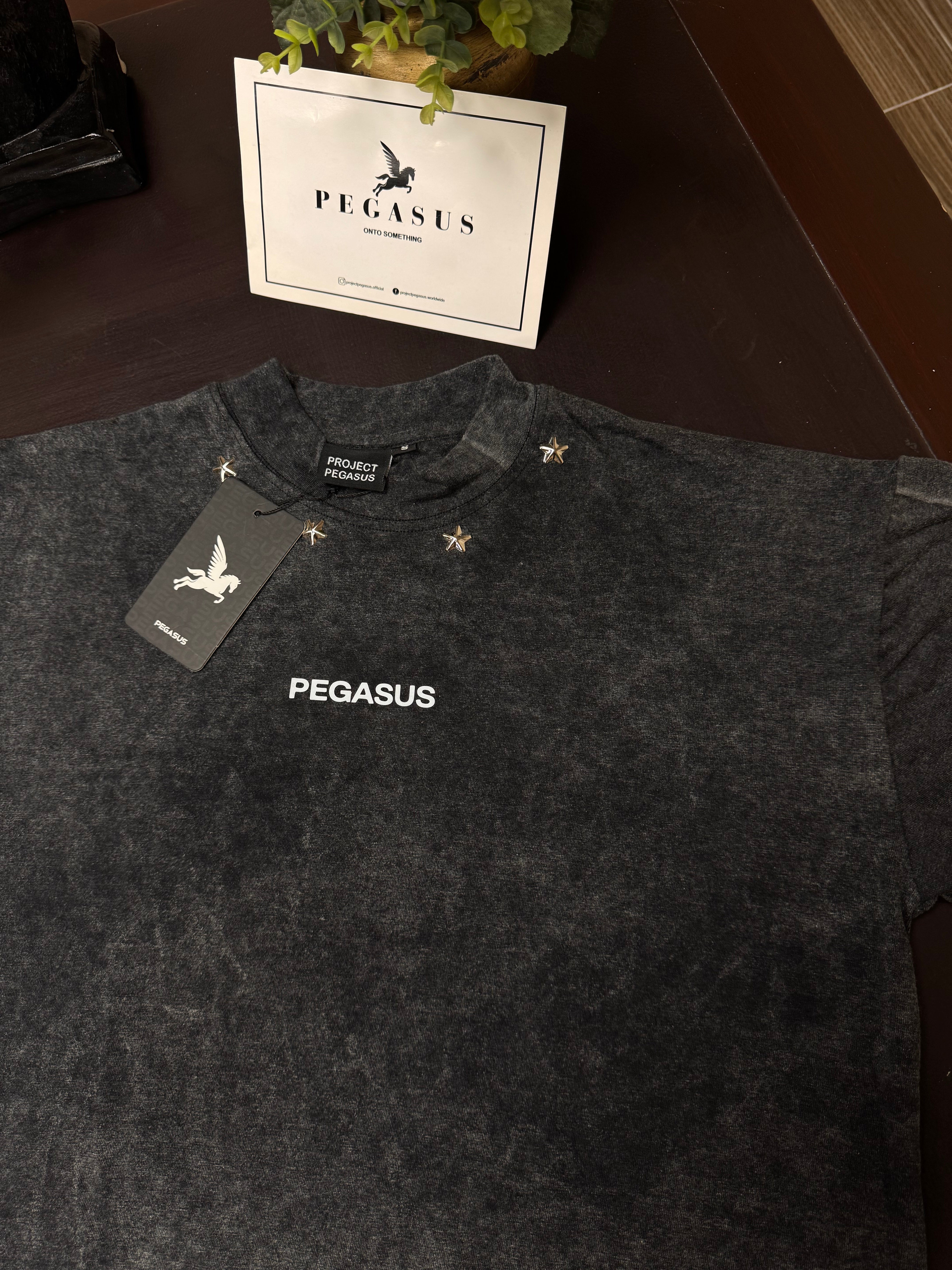
Even inside a single brand's own catalogue, fit descriptions aren't standardized. On Project Pegasus's current hoodie range, one style is described as "relaxed fit, size up for an oversized look," another as "slight oversized fit," and the brand's general homepage copy talks about "oversized hoodies" as a category. None of that is wrong it's just a reminder that a word like "oversized" isn't a fixed measurement.
The number on the size chart is. That's the idea behind this checklist: work through the same 12 checks on any hoodie listing, in this order, and you'll catch almost everything a fitting room would normally tell you.
The 12-point checklist
1. Decide the silhouette before you open any listing
Choose an oversized or drop-shoulder cut (a boxy shape where the seam sits down the arm rather than at your shoulder joint) if you want the classic streetwear silhouette. Choose a brand's "regular" fit if you want something closer and more versatile to layer under a jacket. Choose a cropped style if you plan to pair it with high-waisted bottoms or simply want a shorter body length. Decide this first it narrows which listings are even worth measuring against.
2. Open the size chart for that specific product, not a general size guide
Don't assume "Medium" means the same thing across two different hoodies from the same store. On Project Pegasus's own range, a Small in the Cozy Cropped Hoodie measures 21.5 inches across the chest, while a Small in the Worldwide Pullover Hoodie measures 20 inches different garments, different charts.
One more thing worth checking: some product pages present the size chart as regular page text you can zoom or copy, while others embed it only as an image inside the photo gallery. If a chart is image-only, zoom in before you order, or message the seller for the numbers rather than guessing.
3. Measure yourself, or a hoodie you already own, before ordering
Wrap a soft tape around the fullest part of your chest, or lay a hoodie that already fits you flat and measure armpit-seam to armpit-seam (this is called the pit-to-pit measurement). Check whether the chart's "chest" figure is that flat pit-to-pit number or the full circumference mixing the two up is the single most common sizing mistake, and it's off by a full size in either direction. Add body length (shoulder seam to hem) and sleeve length, and compare all three to the chart rather than trusting the label alone.
4. Confirm the fabric and the GSM, and know what the number does and doesn't tell you
GSM stands for grams per square metre how much one square metre of the fabric weighs. As a rough guide, under about 150 GSM is lightweight, 150–350 GSM is medium weight, and above 350 GSM is heavyweight for most knitted fabrics. A higher GSM means more fabric mass, which usually reads as sturdier and warmer, but it isn't a complete warmth or quality score by itself knit type, fit, and how you layer all matter too.
Choose heavier fleece (above roughly 350 GSM) if you want a hoodie for cooler months or one that holds an oversized, boxy shape. Choose a lighter fabric like cotton terry, or a lower-GSM fleece, if you want more breathability or a hoodie to wear under a jacket.
For reference, Project Pegasus's own Cozy Cropped Hoodie is listed at 450 GSM cotton fleece on its product page (checked Sept 2, 2026), while its Fuse Hoodie uses a lighter cotton terry construction with no GSM figure published. Several of the brand's pullover-style hoodies sit in the 320–350 GSM cotton-fleece range. For a full brand-by-brand GSM comparison against other Pakistani streetwear labels, see the dedicated GSM comparison guide.
5. Check the construction details, not just the fabric weight
Cotton fleece and cotton terry feel and behave differently even at similar weights fleece is typically brushed on the inside for warmth, while terry has a looped texture. Beyond the fabric, look at what's actually built into the garment: zip type and hardware (a full-length metal zip with branded hardware behaves differently from a quarter-zip or a pullover with no zip), cuff and hem finishing (ribbed vs. raw-edge), and whether branding is embroidered or printed. None of this needs a lab test to check it's usually visible in the listing's photos and description, the same way you'd check it in a shop.
6. Understand what's actually driving the price
Price differences inside one catalogue usually track fabric weight, construction detail, and limited-edition status rather than randomness. On Project Pegasus's current range, a plain sweatshirt lists around Rs. 3,440, core pullover hoodies sit roughly between Rs. 4,250 and 8,500, and a limited-edition graphic hoodie is priced at Rs. 8,600–12,000 (all checked Sept 2, 2026). Before comparing two listings on price alone, check whether you're actually comparing the same fabric weight and construction a cheaper hoodie in lighter fabric isn't necessarily worse value, just a different product.
7. Check real-time stock for your exact size and colour
A hoodie can look available in a listing's main photo while a specific colour or size is sold out underneath it several Fuse Hoodie colourways were shown this way on Project Pegasus's own collection page during this check, still displayed with full photography despite being marked "sold out." Always confirm the add-to-cart button is active for the specific size and colour you want, not just the product as a whole.
8. Verify the seller or site is legitimate before entering any payment details
Look for a working HTTPS connection, a real contact channel (phone, WhatsApp, or email), a consistent social media presence, and a physical address if one is listed. Be cautious of prices well below everything else you've seen for a similar item, and avoid transferring full payment upfront to an unfamiliar personal account verified stores generally offer Cash on Delivery (COD, meaning you pay only when the parcel arrives) or a secure payment gateway instead.
For what that looks like in practice: Project Pegasus's shipping policy page lists a WhatsApp number, an email address, and a warehouse address in Gujranwala the kind of verifiable contact details worth looking for on any store, not a claim about how it compares to others.
9. Compare Cash on Delivery against any prepaid discount, and know why they differ
COD carries less financial risk for a first-time buyer on any site, since you only pay once the parcel is in hand. Prepaid discounts exist because they reduce a seller's payment-processing and non-delivery risk on Project Pegasus's product pages, a bank-deposit prepayment currently knocks Rs. 300 off, and adding a second item takes a further Rs. 500 off automatically (both checked Sept 2, 2026, and worth reconfirming, since promotions like these are usually time-limited). Prepaying is reasonable once you've verified the seller; it's the wrong first move with a store you can't yet confirm is legitimate.
10. Read the shipping cost and delivery window on the exact page you're buying from
Delivery estimates and free-shipping thresholds are sometimes stated slightly differently on a store's individual product pages versus its general shipping-policy page this isn't unique to any one brand, and it's common enough that it's worth checking both before you assume a date.
If the delivery timing actually matters (a gift, travel, an event), get it confirmed in writing an order-confirmation email or a direct message to the seller rather than relying on a badge next to the "Add to cart" button.
11. Read the return and exchange terms, including any exclusions
Most Pakistani apparel sites offer a return or exchange window of roughly 7–14 days for unworn items with tags attached Project Pegasus's is 10 days, with one exchange allowed per item.
A detail that's easy to miss: many stores, including this one, exclude sale-priced or discounted items from returns under their stated refund policy. Since a large share of hoodies online carry some kind of discounted "sale price" at any given time, it's worth confirming directly with customer support whether the specific item you want to order at the price you'll actually pay qualifies for a return before you check out, not after.
12. Check the care label before you buy, not after
Heavier or more decorated hoodies often carry stricter care instructions than a simple machine-washable tee. Project Pegasus's Cozy Cropped Hoodie, for example, lists hand-wash only, no bleach, and no ironing over printed areas on its own product page more upkeep than a hoodie you can throw in a normal wash cycle.
If you wear hoodies daily, factor the laundry effort into your decision the same way you'd factor in price or fit. For the full wash-and-dry routine that keeps a fleece hoodie from shrinking or pilling, see this step-by-step guide.
Quick comparison: applying the checklist to three real listings
| Hoodie | Fabric / GSM | Fit & construction | Price (PKR) | Care | Stock (at check) |
|---|---|---|---|---|---|
| Cozy Cropped Hoodie | Cotton fleece, 450 GSM | Relaxed/cropped, quarter-zip, ribbed cuffs & hem, embroidered logo | Rs. 6,990 | Hand wash only, no bleach | 4 left (this size/colour) |
| Worldwide Pullover Hoodie | Cotton fleece, 350 GSM | Relaxed pullover, no zip | Rs. 5,500 | Not stated on product page confirm before ordering | 1 left (this size) |
| Fuse Hoodie (Cadet Blue) | Cotton terry, GSM not published | Slight oversized, full metal zip with branded hardware, hidden side pockets | Rs. 8,500 | Not stated on product page confirm before ordering | 7 left (this size) |
Checked directly on each product page, September 2, 2026. Prices and stock change; this table is a worked example of checklist points 2, 4–6 and 12, not a ranking of "the best" hoodie.
Common mistakes to avoid
- Trusting the size label (S/M/L) instead of the actual chest, length and sleeve numbers.
- Assuming a free-shipping badge applies regardless of order size, without checking the policy page.
- Assuming a discounted item is automatically returnable check the exclusion list first.
- Sending full payment by bank transfer to an unverified seller instead of using COD.
- Judging warmth by GSM alone, ignoring knit type and fit.
- Missing that many stores allow only one exchange per item, not unlimited swaps.
Frequently asked questions
Is it normal for a hoodie's colour to look slightly different once it arrives? Yes, within reason. Screen brightness and photography lighting can shift how a colour reads online, and most product pages disclose this. A small shift in shade isn't the same as receiving the wrong item if the difference is dramatic, that's a return/exchange conversation, not something to write off.
How many times can I exchange a hoodie if the size is wrong? It depends on the store's policy. Project Pegasus, for example, allows one exchange per item for a different size, colour, or product, with you paying any price difference if you move up in value. Check this figure before ordering if you're unsure between two sizes.
Do Pakistani streetwear hoodies run true to international (US/UK) sizing? Don't assume it. Sizing is set by each brand individually rather than following one shared standard, so an "M" on one site and an "M" on another can differ by an inch or more in chest and length. Always compare the chart's actual numbers, not the label, to your own measurements or a hoodie you already own.
What's the real difference between cotton fleece and cotton terry? Both are knitted cotton fabrics, but fleece is typically brushed on the inside for a soft, insulating surface, while terry has a looped, slightly textured feel and often runs lighter. Fleece is the more common winter-hoodie fabric; terry suits milder weather or indoor layering.
Is Cash on Delivery safer than paying online for a hoodie in Pakistan? For a store you haven't bought from before, generally yes you only pay once the parcel is in hand, which removes most of the risk of paying for something that never arrives. Prepaid discounts can still be worth taking once you've confirmed the seller is legitimate through the checks above.
The bottom line
None of these 12 checks take more than a few minutes once you know where to look on a listing page. Together, they cover almost everything a fitting room would normally tell you: how it will fit, what it's made of, how it's built, what it will actually cost to get delivered, and what happens if it's wrong when it arrives.
Run through them once on the first hoodie you buy from a new store, note that store's specific terms for payment, shipping, and returns, and every purchase after that gets faster.
Leave a comment
All comments are moderated before being published.
This site is protected by hCaptcha and the hCaptcha Privacy Policy and Terms of Service apply.