

Pakistani Street Style vs Global Streetwear — What Makes Us Different?
Pakistan's fashion streets are not following the world anymore. They are building their own lane. From Lahore's Liberty Market to Karachi's creative hubs, a generation of young Pakistanis is rewriting the streetwear playbook with cultural depth, local pride, and a boldness that no imported trend can replicate.
Introduction
There is a conversation happening right now in fashion circles around the world, and Pakistan is right at the center of it.
For years, global streetwear dominated the aspirations of young South Asians. Oversized hoodies from New York, cargo silhouettes from Tokyo, and graphic tees from London set the visual standard for what "street cool" meant. Pakistani youth absorbed it all. But somewhere along the way, something shifted.
Instead of just consuming global trends, they began transforming them. Mixing them with Mughal motifs, Urdu script, local fabrics, and a cultural identity that no algorithm could manufacture. Today, streetwear Pakistan is not a copy of anything. It is its own statement.
This article breaks down exactly how Pakistani street style compares to global streetwear, where the two worlds intersect, and why the local scene, championed by brands like Project Pegasus, is carving out a space that the global fashion industry is beginning to take seriously.
The DNA of Global Streetwear
To understand what makes Pakistani street style unique, you first need to understand what global streetwear actually is.
Modern streetwear originated in the American skate and hip-hop scenes of the 1980s and 1990s. It was born out of subculture, not fashion weeks. Baggy silhouettes, graphic typography, athletic influences, and limited-edition drops became the visual language of youth rebellion. Brands built their identity around scarcity and hype. The culture was defined by exclusivity, brand loyalty, and a constant chase for the next "it" piece.
As streetwear globalized, it picked up influences from Japanese youth culture, Korean minimalism, and European luxury. The result was a polished, commercially powerful aesthetic that spread across every continent through social media.
But this globalization also created a paradox. The more universal streetwear became, the less it felt personal. The same oversized silhouettes, the same neutral palettes, the same drop culture. From Seoul to São Paulo, the look began to blur together.
That is exactly where Pakistani street style enters with something genuinely different.
What Defines Pakistani Street Style
Pakistani street fashion has always operated on its own terms, even before the word "streetwear" became part of the local vocabulary.
Walk through any urban Pakistani market on a weekend and you will see young men layering cotton kurtas with joggers, pairing traditional kameez with clean sneakers, or styling shalwar with bold graphic tees. Women are fusing short kurtas with denim, draping dupattas like scarves, and layering sheer ethnic tops over Western basics. None of this was styled for a photoshoot. It emerged organically from daily life.
What separates this from global streetwear is the cultural backbone behind every outfit choice. A Pakistani kid wearing baggy sweatpants Pakistan-style is not just chasing a trend he saw on TikTok. He is making a practical, personal, and culturally informed choice about comfort, identity, and belonging. That layered meaning is something global streetwear, for all its commercial power, often lacks.
Project Pegasus understands this deeply. As one of the forward-thinking Pakistani streetwear brands operating today, Project Pegasus builds collections that speak to this exact intersection of comfort, identity, and local cultural expression.
The Silhouette Conversation: Baggy Fits and Local Sensibility
One of the clearest visual differences between Pakistani street style and global streetwear is how both cultures interpret loose, baggy silhouettes.
Globally, oversized fits emerged as a direct descendant of hip-hop culture, skate aesthetics, and later, high-fashion experimentation. The bagginess was often performative, a deliberate visual statement against fitted, formal clothing.
In Pakistan, loose fits have always carried a different meaning. Comfort in hot and humid climates. Modesty in public spaces. Freedom of movement in everyday life. When Pakistani youth adopted baggy sweatpants Pakistan-made labels now produce beautifully, it was not just an aesthetic choice. It was a convergence of global style with deeply local logic.
The same applies to baggy jorts Pakistan fashion has quietly embraced. What global streetwear treats as a bold styling choice, Pakistani urban youth integrate naturally into everyday looks, often styled with kurtas, oversized tees, or clean athletic sneakers. The result is a silhouette that feels simultaneously global and unmistakably local.
Project Pegasus has been thoughtful about this, designing pieces that honor the baggy, relaxed aesthetic that defines modern streetwear while keeping the proportions and fabric choices suited to the Pakistani lifestyle. Their collections reflect an understanding that Pakistani buyers do not want imitation; they want interpretation.
Cultural Identity as a Design Language
This is where Pakistani street style truly separates itself from the global mainstream.
International streetwear brands built their identities around logos, hype, and references to Western pop culture. Pakistani streetwear is building its identity around something far more compelling: a civilization's worth of artistic heritage.
Consider what young Pakistani designers and labels are doing. Urdu poetry printed on hoodies. Mughal geometric patterns reinterpreted as graphic tee prints. Truck art color palettes applied to oversized outerwear. Traditional block printing techniques applied to modern streetwear cuts.
This is not nostalgia. It is a conscious reclamation of visual identity in a world that has long looked elsewhere for style inspiration.
Project Pegasus reflects this ethos in how it approaches collections. Rather than chasing what is trending in New York or Tokyo, the brand focuses on what resonates with Pakistani youth on a cultural level, creating pieces that carry meaning beyond aesthetics. For updated pricing and the latest collection details, please visit the official Project Pegasus website.
The Role of Social Media in Shaping Pakistani Streetwear
No conversation about streetwear Pakistan is complete without acknowledging the role of Instagram and TikTok in accelerating the local scene.
Pakistani fashion influencers, style bloggers, and young creatives turned social media into their runway. They showed how to pair traditional elements with modern silhouettes, how to style baggy sweatpants Pakistan fashion produces with everything from graphic tees to ethnic prints, and how to build a wardrobe that does not look like it was copied from a Western lookbook.
This organic, peer-to-peer fashion education did something that no marketing campaign could have achieved on its own. It built confidence. It told Pakistani youth that their aesthetic instincts were valid, that they did not need to look outside their own cultural context for style inspiration.
Project Pegasus has been part of this cultural shift, connecting with its audience through content that feels genuinely local rather than borrowed. That authenticity is what separates the brands gaining real traction in this space from those merely importing global aesthetics with a Pakistani price tag.
Pakistani Streetwear Brands: Building Identity, Not Imitating It
The growth of Pakistani streetwear brands over the past few years has been remarkable. What began as a handful of underground labels selling graphic tees at pop-up events has evolved into a full ecosystem of brands with strong visual identities, loyal customer bases, and genuine cultural relevance.
What sets the best of these brands apart from their global counterparts is that they are not trying to be Supreme or Off-White with a South Asian twist. They are building something entirely their own.
Project Pegasus is a strong example of this approach. The brand does not position itself as a local version of something else. It positions itself as a distinctly Pakistani creative label, one that understands the youth it serves and speaks to their actual lives, not the lives they see on imported mood boards.
From their approach to fabrics suited to the Pakistani climate, to their silhouettes that balance modern streetwear proportions with local sensibility, Project Pegasus has built a brand identity that feels earned rather than manufactured.
Climate, Context, and Fabric: The Practical Differences
One often-overlooked dimension of the difference between Pakistani street style and global streetwear is the practical dimension of climate and context.
Global streetwear, especially its American and European expressions, was developed in specific climates and social contexts. Heavy cotton hoodies, layered outerwear, and thick denim made sense in New York winters or London's overcast streets.
Pakistan's urban environments demand something different. Breathable cottons, lighter knits, and fabrics that perform in humid summers without losing their shape or color are not optional extras. They are necessities.
This is why Pakistani streetwear brands that get it right, including Project Pegasus, pay serious attention to fabric selection and construction. A pair of baggy jorts Pakistan summer heat demands has to be made from a fabric that keeps the wearer comfortable, not just stylish. A hoodie worn in Lahore's cooler months needs to balance warmth with wearability in a way that a standard American streetwear hoodie simply was not designed to do.
When Project Pegasus designs its collections, this practical intelligence is baked into every choice, from stitching to fabric weight to fit.
Where Pakistani Street Style and Global Streetwear Converge
Despite all these differences, it would be inaccurate to paint Pakistani street style and global streetwear as completely separate worlds. There are real points of convergence, and they are worth acknowledging.
Both share a fundamental belief in comfort as a form of self-expression. Both have been shaped by music culture, with hip-hop and rap influencing youth aesthetics across both contexts. Both have pushed back against the formality of traditional fashion, creating space for young people to dress on their own terms.
The oversized silhouette, the graphic print, the clean sneaker, the relaxed bottom: these are elements that appear across both Pakistani street style and global streetwear precisely because they answer a universal desire for clothing that feels free, expressive, and personal.
Project Pegasus sits at exactly this intersection. It takes the shared language of global streetwear and translates it through a lens that Pakistani youth can see themselves in. That translation is the brand's core creative act, and it is what makes its collections feel both current and authentically local.
The Future of Pakistani Streetwear on the Global Stage
The global fashion industry is beginning to pay attention to what is happening in South Asian streetwear, and Pakistani labels are well-positioned to be part of that conversation.
As cultural diversity becomes more commercially valued in fashion, the unique fusion aesthetic of Pakistani street style carries genuine international appeal. The combination of rich textile heritage, bold graphic traditions, and a young, digitally connected population creating original content is a recipe for a scene that can export its influence, not just import it.
Brands like Project Pegasus that have invested early in building strong local identities, clear brand values, and loyal audiences will be the ones that travel well. The authenticity that makes them resonate at home is exactly what makes them compelling abroad.
The future of streetwear Pakistan is not about catching up to the global scene. It is about leading a new conversation about what streetwear can be when it is rooted in genuine cultural depth.
Conclusion
Pakistani street style is not a footnote in the global streetwear story. It is a chapter being written in real time by a generation that has stopped waiting for permission to create on its own terms. The differences between local and global streetwear are not weaknesses in the Pakistani scene.
They are its greatest strengths. The cultural richness, the practical intelligence, the fusion aesthetic, and the sense of identity that runs through every silhouette make Pakistani streetwear genuinely distinct.
Brands like Project Pegasus are proof that you do not have to abandon your roots to be globally relevant. In fact, those roots are exactly what make you worth paying attention to. As the local scene matures, the world is only going to take more notice.
Explore Project Pegasus: Wear What You Stand For
If you have been searching for streetwear that actually reflects who you are, not just what is trending, Project Pegasus was built for you. Every collection is designed with the Pakistani lifestyle in mind: the climate, the culture, the daily realities of urban life, and the desire to dress with intention rather than imitation.
From premium baggy silhouettes to culturally rooted graphic pieces, Project Pegasus offers Pakistani youth a wardrobe that moves with confidence. This is not about following the global streetwear playbook.
This is about writing your own. Visit the official Project Pegasus website to explore the latest drops, browse full collections, and find pieces that speak to your identity. For updated pricing and the latest collection details, please visit the official Project Pegasus website.
Read more
Pakistan's streetwear scene has officially arrived. Young designers are building labels that rival global names, local drops sell out within hours, and oversized silhouettes are rewriting what Paki...
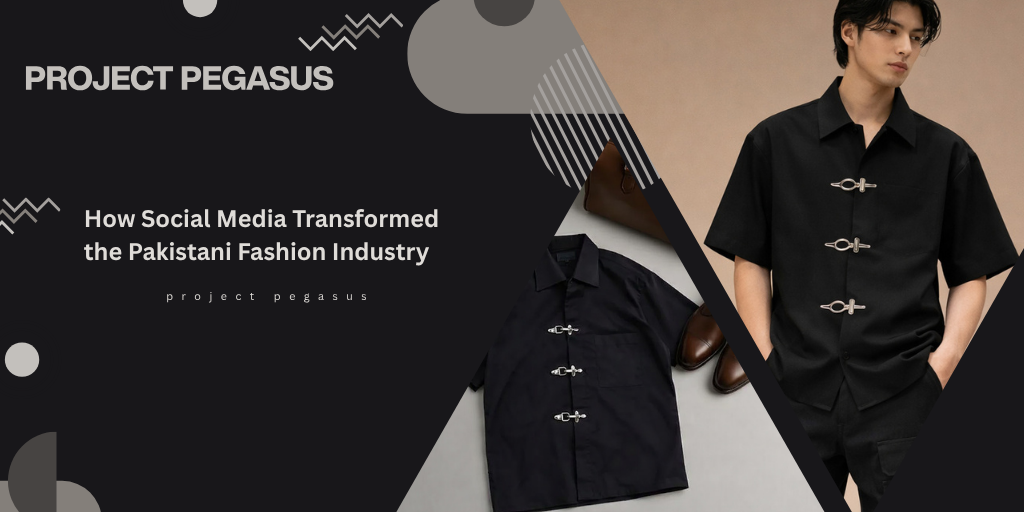
Ten years ago, launching a fashion brand in Pakistan meant renting a shop, printing catalogues, and hoping word-of-mouth did the heavy lifting. Today, a single viral reel can sell out an entire col...
Leave a comment
All comments are moderated before being published.
This site is protected by hCaptcha and the hCaptcha Privacy Policy and Terms of Service apply.